
 Fabio Cardoso | 99 Portas
 Fabio Cardoso | 99 Portas
 Fabio Cardoso | 99 Portas
Fabio Cardoso
From Mar 26 to May 11 2007
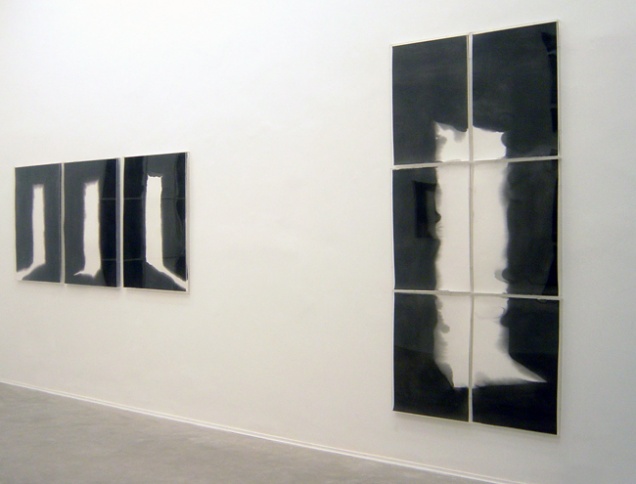
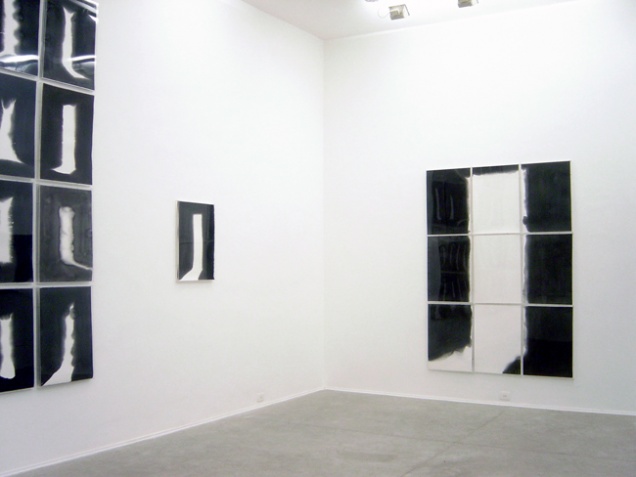
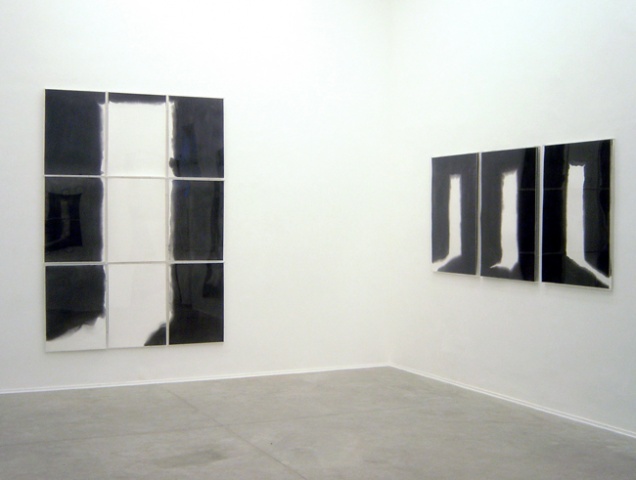
Even when at rest, the artist is always toiling. In the present case, to create his watercolours, Fabio Cardoso opens up an interval in his production of paintings, mostly large-sized canvases, produced in a process where the meticulous and attentive actions are intertwined with chance. The smaller scale works on paper are classically considered the place where the mind and the hand of the artist might rest. With no greater demands besides the overflowing of ideas and motifs, the artist unwinds. But there are cases when that which was intended as a laboratory, is turned into an end in itself. And the work, from erraticism, is converted into beingness ? a productive place. This seems to be precisely the case of the series 99 Portas.
To start with, it is worthwhile to point out the intimate relationship between these watercolours and the paintings by Fabio Cardoso. Both, although in different degrees of density, are born from the same liquid materiality. But while the paintings deal with overlaying of oil paint diluted in turpentine, a product that is so caustic that it does not only act upon the surface of the canvas but it infiltrates in its innards, sometimes bringing to the surface the marks of the wood frames where it is stretched, his invariably black watercolours happen on the margins, veiling the paper but leaving its centre immaculate. The whiteness of the paper is in contrast with the black colour as much as the gesture of the artist ? a concise calligraphy, in contrast with the purity of the field that he tackles.
Why door and why 99 Doors? Door, because as Marcel Duchamp once proposed, the work of art is a passage, a perfect evidence of the porosity, if not of the space, of the world itself. Furthermore, as it is known, the tradition of painting in the western world dates back to the idea of window, the trompe l?oeil effect with which it intended to conceal the presence of the wall where it was fixated. Following this line of thought, the door is an expansion of the problem and is an allusion to the connection between the space where we are and the other side, beyond what is seen ? the door as a possibility. As for the number 99, it is due to the logic of variation, the obsessive and self-absorbed exercise of trying to extract difference from repetition. Various examples exist, and not to bore the reader, it would be enough to bring to mind two of the most famous ones: Bach?s Goldberg Variations and Queneau?s Exercises in style ? one in music and the other one in literature. Finally, there remains the remembrance of those who defend the idea, in fact a very plausible one, which artists live to tell only one sole thing. A proof of the inaccessibility of perfection, the pessimists would say, or a demonstration that one can always improve, as the other half would put it. But perhaps neither one. Maybe in each gesture, in the minimal variation between one and the other, in the greater or smaller effort, in the subtle oscillations of the paint gradations is where the artist is self-realised.
Agnaldo Farias